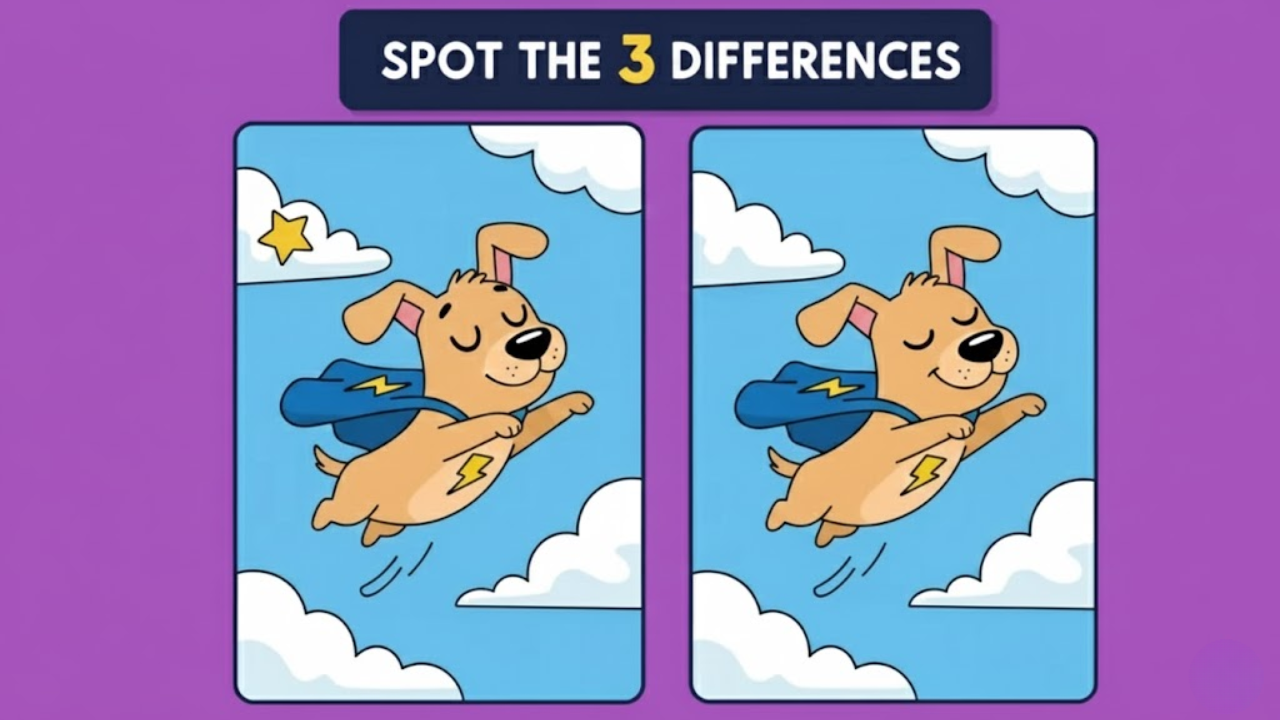
Can You Solve This in 7 Seconds? If you’re someone who enjoys brain teasers and quick visual challenges, this puzzle is the perfect test for your observation skills. The image of a girl singing may look straightforward at first, but hidden within it are three subtle differences that can easily escape notice—unless your eyes are sharp, quick, and attentive. Your task is simple yet exciting: spot all three changes in just 7 seconds. It’s fast, fun, and a great way to keep your brain active.
A Quick Test of Attention and Accuracy
The singing girl puzzle is designed to trick your eyes with nearly identical illustrations. Your mind initially processes the overall picture, but you must rely on focused observation to identify the differences. Hidden variations can appear in unexpected places—a small accessory, a detail in the hair, a shift in color, or a subtle background modification. Spotting these changes demands both concentration and visual agility.
This is what makes the challenge so thrilling. Your brain jumps into detective mode, scanning each area instantaneously while racing against the clock. When you discover a difference, the sense of accomplishment is instant and satisfying.
Why Tiny Details Make This Puzzle Difficult
Visual puzzles are deceptive because they capitalize on the brain’s tendency to overlook minor variations. The human mind often focuses on the bigger picture, ignoring smaller elements unless specifically directed. That’s exactly what this singing girl challenge plays with.
Although the overall image remains nearly the same, the inconsistencies are hidden in small places—like a hair strand, a bracelet, or a microphone detail. These minor alterations require your full attention, and that’s where the real test lies. Identifying them quickly sharpens your visual awareness and improves cognitive processing speed.
Accessories Hold Important Clues
One of the most common areas where puzzle creators hide differences is in accessories. For example:
- Earrings may be missing or shaped differently
- A bracelet’s color may change
- The neckline or strap of the dress may appear altered
Because accessories are small and decorative, the brain often ignores them unless you consciously examine them. Training yourself to look closely at such elements not only helps you win puzzles like this but also enhances your real-world ability to notice subtle changes in objects, patterns, or surroundings.
Hair and Facial Features Often Hide Changes
Hair is one of the trickiest places to spot differences because small changes blend naturally into the artwork. A shifted strand, a curl positioned differently, or a slight change in hairstyle can easily go unnoticed.
Similarly, facial features—like a small change in expression, eyebrow shape, or mouth position—require sharp focus to catch. These differences are intentionally subtle so that only those with excellent attention to detail can detect them within a limited timeframe.
Observing faces and hair in puzzles also trains your visual memory, helping you recall details faster in everyday situations.
Don’t Forget Colors and Patterns
Color variations and background patterns are extremely common in spot-the-difference challenges. Even a minor shift in hue or a small missing element in the backdrop can be one of the key differences.
The singing girl puzzle may include:
- A slightly altered dress color
- A missing background symbol
- Pattern changes in clothing or objects
These details may seem insignificant at first, but they are essential clues for solving the puzzle under time pressure.
How These Puzzles Improve Brain Function
Beyond the fun and excitement lies a deeper benefit—visual puzzles like this are powerful mental exercises. They enhance:
- Focus and concentration
- Pattern recognition
- Memory retention
- Processing speed
- Attention to detail
With consistent practice, your brain becomes more efficient at scanning information, analyzing visuals, and identifying anomalies quickly. These skills translate directly into everyday activities, from reading documents to navigating environments more attentively.
Boosting Speed Through Practice
If you want to get better at solving these puzzles within tight time limits, practice is your best tool. Start with simpler challenges and gradually attempt more complex ones like this singing girl image.
Time yourself regularly to track progress. You’ll notice that with practice:
- Your scanning speed increases
- You recognize patterns faster
- Your accuracy improves even under pressure
Over time, your eyes will learn where to look first, helping you solve even the toughest puzzles with ease.
Sharing the Challenge Adds More Fun
This puzzle becomes even more enjoyable when shared with friends or family. Challenge them to spot all three differences within 7 seconds and compare results. It sparks friendly competition, laughter, and curiosity as everyone tries to outsmart each other.
Whether at home, at work during a break, or online, these shared challenges create a fun and interactive way to connect with others while exercising the mind.
Conclusion
The singing girl spot-the-difference challenge is more than just a quick game—it’s a meaningful mental workout disguised as entertainment. It sharpens your focus, boosts memory, enhances visual perception, and encourages quick decision-making. Whether you’re solving it alone or sharing it with others, the thrill of finding all three hidden differences within seven seconds is both rewarding and addictive.
Keep practicing, keep observing, and enjoy the delightful satisfaction of catching the tiny changes that most people miss. With time, your observation skills will grow sharper, making even the most difficult puzzles easier to solve.
FAQs
1. How many differences are there to find in the singing girl puzzle?
There are three hidden differences between the two images.
2. Is the 7-second time limit mandatory?
No, it’s just a fun challenge. You can take more time if you prefer.
3. Are spot-the-difference puzzles good for improving focus?
Yes, these puzzles enhance attention to detail, visual memory, and cognitive speed.
4. Can kids also solve this puzzle?
Absolutely! It’s suitable for all ages and great for developing observation skills.
5. Is sharing this puzzle with others beneficial?
Yes, sharing the challenge adds fun, competition, and helps boost social engagement.