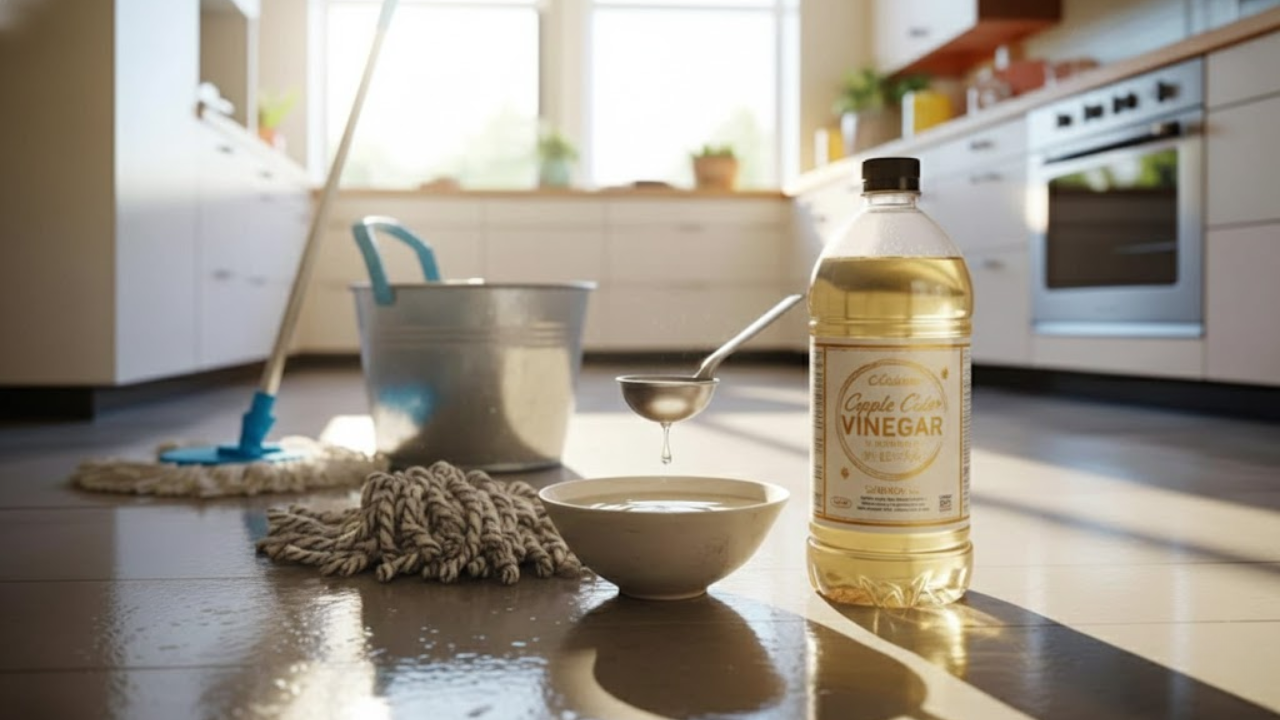
The bucket is ready, the mop stands in the corner, and you’ve added the usual cleaner—the one that promises “long-lasting freshness.” Yet within an hour or two of mopping, the house smells… tired. Damp. A little like a gym changing room trying its best.
Some people double the detergent. Others splurge on luxury floor sprays that smell divine for an afternoon and disappear by dinner. Still, the freshness fades fast—and the solution sits quietly in your kitchen cabinet.
A single spoonful of a cheap, clear liquid can stretch that fresh-floor feeling to almost an entire week. It sounds like a viral hack that shouldn’t work—but it does.
The Surprising Ingredient That Changes Everything
I first noticed this trick in a friend’s compact London flat—the kind of place where cooking smells and humidity linger like uninvited guests. Except her home didn’t have that heavy, lived-in scent at all. Instead, the air felt light, the floors smelled freshly cleaned, and the whole space had that subtle “hotel-clean” vibe.
When I asked her which high-end cleaner she used, she laughed and handed me a worn supermarket bottle of clear white vinegar.
“One tablespoon in the mop water,” she said.
No luxury brand. No fancy scent. Just basic white vinegar—the cheapest cleaning helper most people forget about.
Why Vinegar Works So Well in Mop Water
Floors don’t just collect dust and dirt—they trap odours. Grease, detergent residue, pet smells, cooking vapours, and shoes combine into a dull, lingering scent that standard cleaners can’t neutralise.
White vinegar’s mild acidity dissolves those invisible layers:
- It breaks down old detergent film
- Neutralises odour-causing molecules
- Cuts through grime regular cleaners only skim
Used sparingly, it doesn’t perfume the room—it resets it. The result is that neutral, crisp, “clean” scent that lasts days longer.
How to Use Vinegar Correctly (Without Making Your Home Smell Like a Chip Shop)
The method is so simple it barely feels like a “hack”—but the small details matter.
Step-by-Step Guide
- Fill the mop bucket with warm water
- Add 1 tablespoon of plain white vinegar
- Add half your usual amount of floor cleaner
- Stir lightly
- Mop in small sections, wringing well
- Let floors dry with windows open
The vinegar smell evaporates quickly as the floor dries, leaving behind a clean, fresh scent that lasts days—not hours.
The Most Common Mistakes
- Using too much vinegar (never more than 1 tbsp per bucket)
- Using apple cider or coloured vinegar (can stain floors)
- Mixing vinegar with bleach or ammonia (dangerous gases)
- Not sweeping before mopping
- Leaving floors overly wet, causing damp smells
The method works because it enhances—not replaces—your usual cleaner.
Real-Home Results: Why the Freshness Lasts Longer
One reader told me her hallway always smelled like wet dog after her kids’ football practice. She tried the vinegar method expecting nothing. Five days later, her sister walked in and asked if she’d “booked a cleaning service.”
The lasting effect comes from two things:
1. Neutralising Odours at the Source
Vinegar breaks down odour molecules instead of covering them with perfume.
2. Removing Old Detergent Film
A cleaner surface attracts less dust and fewer smells, so floors stay fresh longer.
Most people don’t clean perfectly every day—so a trick that buys you 4–7 days of freshness without extra work feels like winning.
What to Do, What to Avoid
The Perfect Routine
- Use 1 tbsp white vinegar per bucket
- Always sweep first
- Mop with a well-wrung mop
- Open windows for quick drying
- Rinse mop head afterward
Avoid These Mistakes
- Never mix vinegar with bleach
- Don’t use apple cider or balsamic vinegar
- Skip vinegar on sensitive stone or waxed wood
- Don’t overuse—more is not better
Why This Small Hack Changes the Feel of Your Home
This isn’t about trendy scents or influencer cleaning kits. It’s about a humble bottle that quietly elevates the entire home.
There’s something grounding about replacing expensive “deep clean” products with a simple kitchen staple. It’s efficient, cost-effective, and shockingly reliable.
Unexpected guests?
Bad cooking smell?
Pet odours?
A spoonful of vinegar in your mop bucket resets the house faster than any scented candle.
Many people try it once—and never stop.
Quick Reference Table
| Key Point | Detail | Benefit |
|---|---|---|
| Spoonful of vinegar | 1 tbsp white vinegar in warm mop water | Floors stay fresh up to a week |
| Odour neutralisation | Breaks down smell-causing molecules | True freshness, not perfume |
| Easy routine | No new products needed | Saves time, money, and effort |
FAQs
1. Will my home smell like vinegar?
There’s something grounding about replacing expensive “deep clean” products with a simple kitchen staple. It’s efficient, cost-effective, and shockingly reliable.
2. Can I use this on wooden floors?
Safe on sealed wood—always patch-test first. Avoid vinegar on waxed, oiled, or sensitive stone floors.
3. Does it have to be white vinegar?
Yes. Other vinegars can stain or leave unwanted smells.
4. How often should I mop with vinegar water?
Once a week is enough for most homes.
5. Can I combine vinegar with my regular cleaner?
Yes—if your cleaner is not bleach-based and doesn’t contain ammonia.