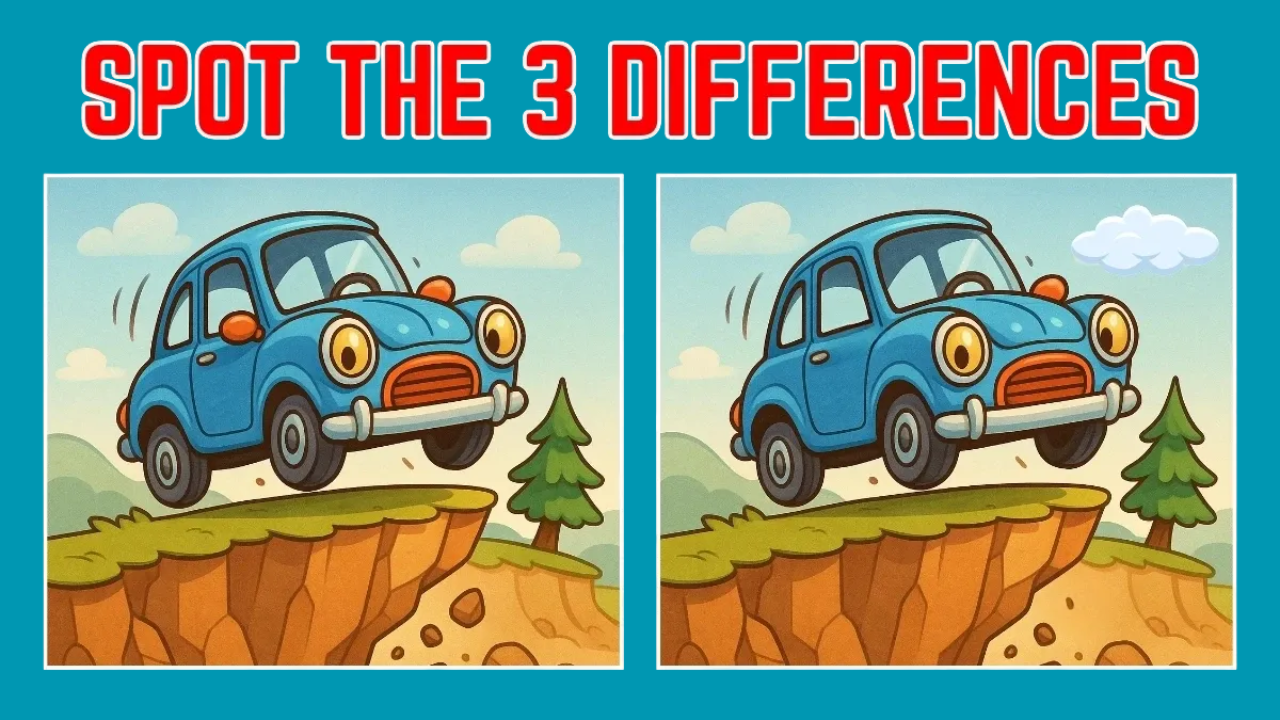
Spot-the-difference puzzles are one of the simplest yet most effective ways to challenge your brain. This time, the challenge is to spot 3 hidden differences between two car images in just 8 seconds. While the pictures may look almost identical at first glance, the subtle differences make this puzzle both fun and mentally stimulating. Ready to test your observation skills? Let’s dive into the challenge.
A Quick Challenge to Test Your Visual Skills
Your task is to find three differences between two car pictures in under 8 seconds. While it may sound easy, the differences are intentionally subtle. To succeed, you must rely on sharp attention to detail and quick visual processing.
The limited time frame adds an exciting layer of pressure, making this more than just a casual game. The faster you can scan the images for subtle visual cues, the better your chances of finding all three differences before the clock runs out.
Why Spot-the-Difference Puzzles Are So Entertaining
These puzzles have remained popular for decades because they offer a unique blend of relaxation and mental challenge. They provide:
- A boost to cognitive performance
- An opportunity to sharpen observation skills
- A fun, competitive experience for individuals or groups
Spot-the-difference puzzles also help train your mind to focus on small details, a skill that can be useful in everyday tasks—reading instructions carefully, detecting errors, and improving pattern recognition.
Techniques to Spot Differences Quickly
If you find yourself struggling to beat the 8-second limit, here are a few expert tips to enhance your ability:
Examine the broader elements first
Start by comparing the overall shapes, sky, road, or major background elements. Sometimes the biggest clues hide in plain sight.
Scan small details systematically
Once the main elements match, move on to details like windows, wheels, lights, or environmental features around the car.
Divide the image mentally
Break the picture into upper, middle, and lower sections. This prevents your eyes from jumping randomly and missing key differences.
Stay focused—not frantic
While the time pressure is part of the fun, rushing too much can cause you to overlook obvious changes. Stay calm and let your eyes do the work.
How the Brain Reacts to Spot-the-Difference Challenges
Spot-the-difference puzzles activate the parts of your brain responsible for visual perception, memory, and quick decision-making. When comparing two similar images, the brain must filter out distractions and focus intensely on identifying mismatches.
This type of cognitive exercise:
- Strengthens attention span
- Improves visual memory
- Boosts processing speed
- Enhances the ability to notice small changes in real life
And on top of that, solving these puzzles gives a satisfying sense of accomplishment, especially when done under a strict time limit.
Revealing the 3 Hidden Differences
If you couldn’t find all three differences within 8 seconds, here are the changes you may have missed:
1. A cloud in the sky is altered or missing
Cloud patterns in the two images differ subtly—an easy-to-miss modification that blends into the background.
2. A circular detail on the car door is changed
The window or door trim shows a slight variation between the pictures. This is one of the trickier details, as it blends with the car’s design.
3. A rock or ground detail near the cliff is different
In the background edge of the cliff, one rock formation or ground pattern changes location or size between the two images.
These carefully placed differences highlight how small visual elements can change the perception of an entire picture.
Real Benefits of Playing Spot-the-Difference Puzzles
These puzzles aren’t just fun—they offer meaningful mental benefits:
Improved visual perception: You learn to notice subtle details that most people overlook.
Better focus and concentration: Staying engaged with the task boosts your ability to focus longer.
Enhanced memory: Remembering the first image while examining the second sharpens visual recall.
Stress reduction: The satisfaction of finding differences provides a mental break and boosts mood.
Fun for all ages: Whether alone or with friends, these puzzles are universally enjoyable.
Final Thoughts: Keep Practicing and Challenge Yourself
Spot-the-difference puzzles are a fun way to test and strengthen your observation skills. Whether you completed the challenge in 8 seconds or needed a bit more time, what matters most is the mental workout you gain from focusing, comparing, and analyzing visual details.
Continue practicing these puzzles regularly—they’ll sharpen your mind, improve your attention to detail, and make you faster at spotting subtle changes. Who knows? With enough practice, the next time you face an 8-second challenge, you might spot all the differences instantly.