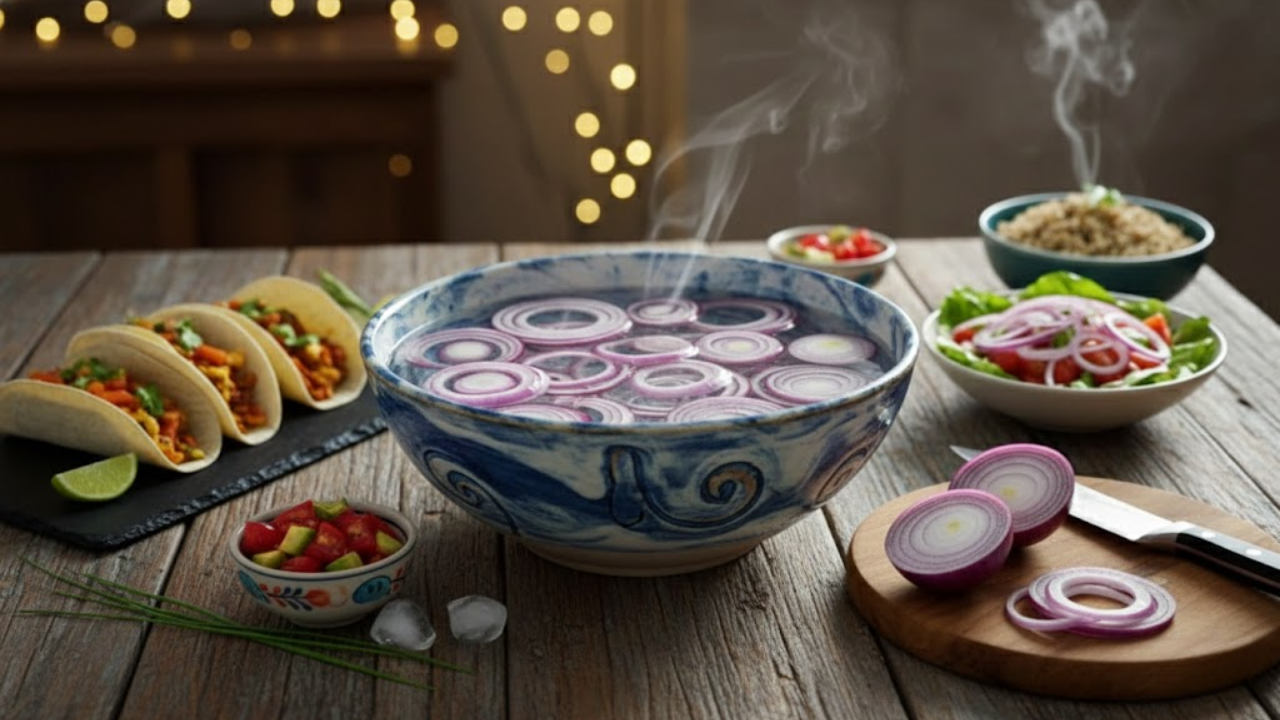
The first tear escaped before she even realized she’d been squinting.
A small kitchen, a busy weeknight, and a mountain of onions waiting to be sliced for tacos and a big salad. The air felt sharp enough to slice back, every cut releasing those familiar stinging fumes. Within minutes, her eyes burned and the room filled with that unmistakable onion punch that takes over everything.
Yet just 10 minutes later, she set the same onions on the table — crisp, sweet, fragrant in a gentle way. No tears. No sharp bite. Her friends dug in happily.
“What did you do to these?” someone asked.
She simply pointed at a glass bowl sitting in the sink — half-filled with cloudy, ice-cold water. No gadgets. No hacks. Just a humble trick that quietly changes the entire experience of cooking with onions.
The Culinary Science Behind the Cold-Water Soak
Raw onions often dominate a dish instead of enhancing it. They burn your eyes, linger on your breath, and overpower delicate flavors.
What actually happens when onions hit cold water?
When an onion is cut, you break open cells that release sulfur-based compounds. These molecules are:
- volatile (they travel quickly through air)
- irritating (triggering tears and burning)
- aggressive in flavor
Cold water does two quiet but powerful things:
1. It draws out some sulfur compounds
A brief soak pulls out just enough of the harshness to tone down the burn — not the flavor.
2. It firms up the onion’s structure
Cold water tightens the cell walls, making the onion crisper and more refreshing.
Instead of shouting through your dish, the onion becomes well-balanced — bright, crunchy, and clean.
Proof From the Kitchen: A Real Restaurant Test
In a fast-paced London restaurant, a line cook ran a simple experiment during the lunch rush:
- Batch A: raw onions straight from the board
- Batch B: onions soaked in ice water for 10 minutes
During staff meal, the team tasted both.
The results were immediate and unanimous:
- Unsoaked onions → sharp, pungent, lingering “dragon breath”
- Soaked onions → crisp, juicy, clean, balanced
Guests confirmed it by what they didn’t leave behind. Plates with soaked-onion salads came back empty; the others returned with sad piles of rejected onion slices.
The kitchen switched permanently.
How to Soak Onions Properly (Most People Do This Wrong)
The technique is extremely simple — but the mistakes are common.
Step-by-step:
- Slice or dice the onion first (more surface area = better results).
- Submerge in very cold water — add ice if available.
- Soak for 5–15 minutes depending on strength.
- Stir occasionally.
- Drain and pat dry before adding to your dish.
Timing matters:
- 5 minutes → softer bite but still sharp
- 10 minutes → ideal balance for salads and tacos
- 15 minutes → for very strong onions or sensitive eaters
The biggest mistakes:
Over-soaking
More than 20–30 minutes and onions turn watery and bland.
Using warm water
Warmth intensifies sulfur release — the exact opposite of what you want.
Skipping seasoning afterward
After soaking, onions absorb seasoning beautifully.
A pinch of salt, lemon, vinegar, or olive oil transforms them.
What This Simple Trick Changes in Your Cooking
Less irritation while chopping
Cold soaking reduces the compounds that irritate your eyes and nose.
Better balanced dishes
Soaked onions don’t dominate — they support.
Perfect for:
- salads
- salsas
- tacos
- ceviches
- sandwiches
- grain bowls
More people enjoy the dish
Kids stop picking onions out.
Friends who “hate raw onion” suddenly love your salsa.
Flavors merge instead of clash.
More creative freedom
Once onions are controlled, you can use them in:
- yogurt sauces
- wraps
- pizza toppings
- quick pickles
- cold noodle bowls
- dips and chutneys
It stops being a fight. It becomes a collaboration.
A Quiet Kitchen Habit With Big Impact
Cooking on busy days can feel unpredictable — ingredients vary, timing slips, and sometimes even your reliable oven acts out. But soaking onions is a guaranteed win. It requires no effort, runs in the background, and always improves the final dish.
It’s one of those small rituals you start doing once… and never stop. A bowl of cold water becomes a tiny act of kindness in your kitchen, a reminder that even the simplest habits can elevate everyday meals.
Quick Reference Guide
| Key Point | Detail | Benefit |
|---|---|---|
| Cold water soak | 5–15 minutes in chilled water | Softens harsh bite, keeps crunch |
| Slice before soaking | More surface area exposed | Faster, better results |
| Dry before using | Avoids watering down dishes | Preserves texture |
| Season after soaking | Salt/acid/oil cling better | Brighter, cleaner flavor |
| Skip soak for cooked dishes | Heat mellows onions naturally | Saves time |
Frequently Asked Questions
1. Should I soak all types of onions?
Yes — red, yellow, and white all benefit.
Red onions show the most dramatic improvement.
2. Can I use salted or vinegared water?
Yes, lightly.
A quick soak in seasoned water adds flavor and softens the bite further.
3. Does soaking reduce nutrients?
Only a small amount of water-soluble compounds are lost.
The boost in flavor and digestibility outweighs this.
4. Can I soak onions ahead of time?
Yes — soak for 10 minutes, then drain and store dry in the fridge for a few hours.
5. What if I enjoy strong onion flavor?
Then shorten the soak to 3–5 minutes, or skip it entirely.